
Every transaction checked for the right VAT treatment, not just the right format.
The Problem
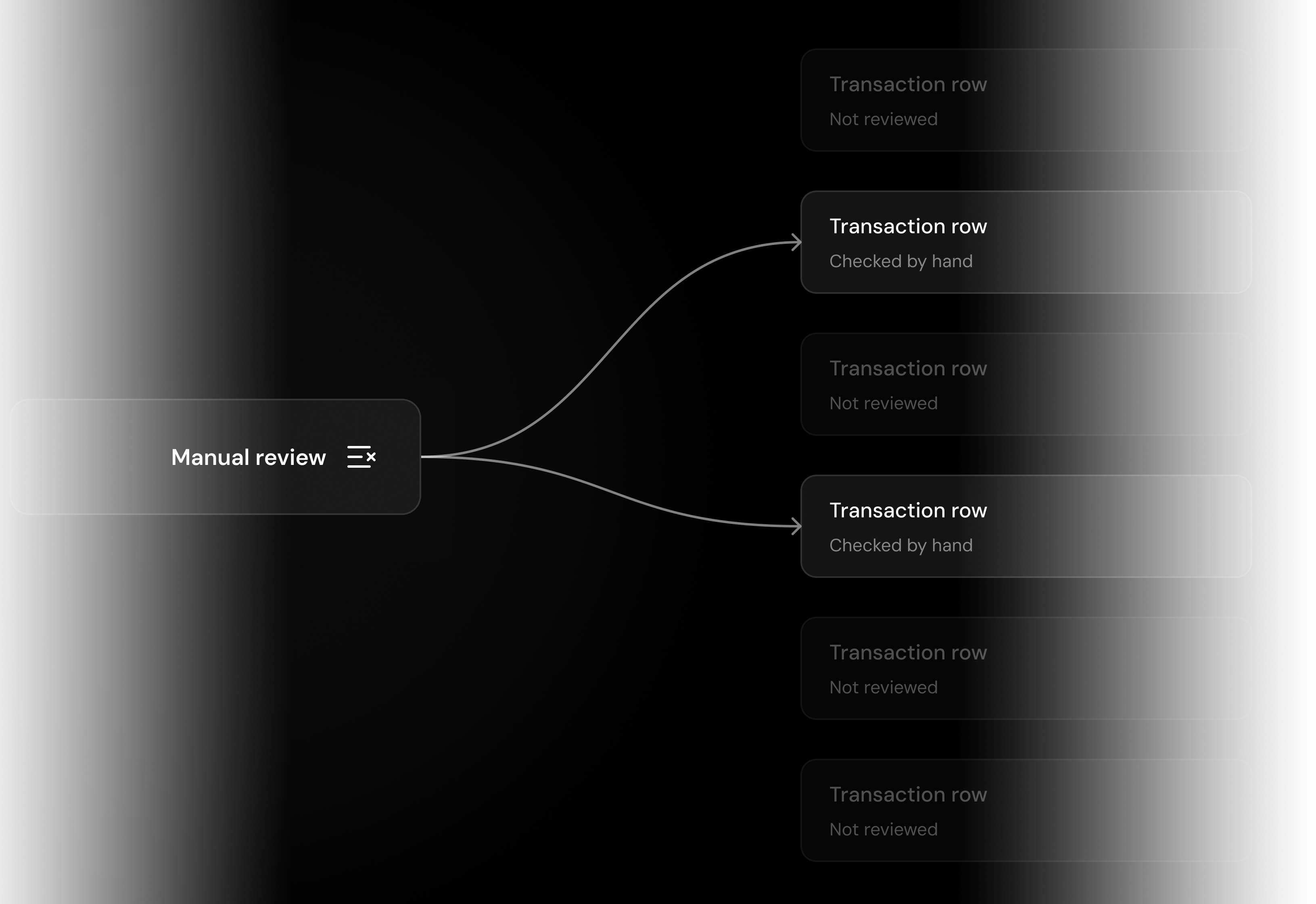
Manual VAT review only ever reaches a sample: in practice, most tax teams substantively check somewhere between 1% and 5% of transactions, at €200 or more per hour of specialist time. The other 95%+ isn't wrong until an authority looks, and from 2028, every domestic B2B invoice you issue is structured data, and the next audit reads all of it by machine, not a sample.
The Solution
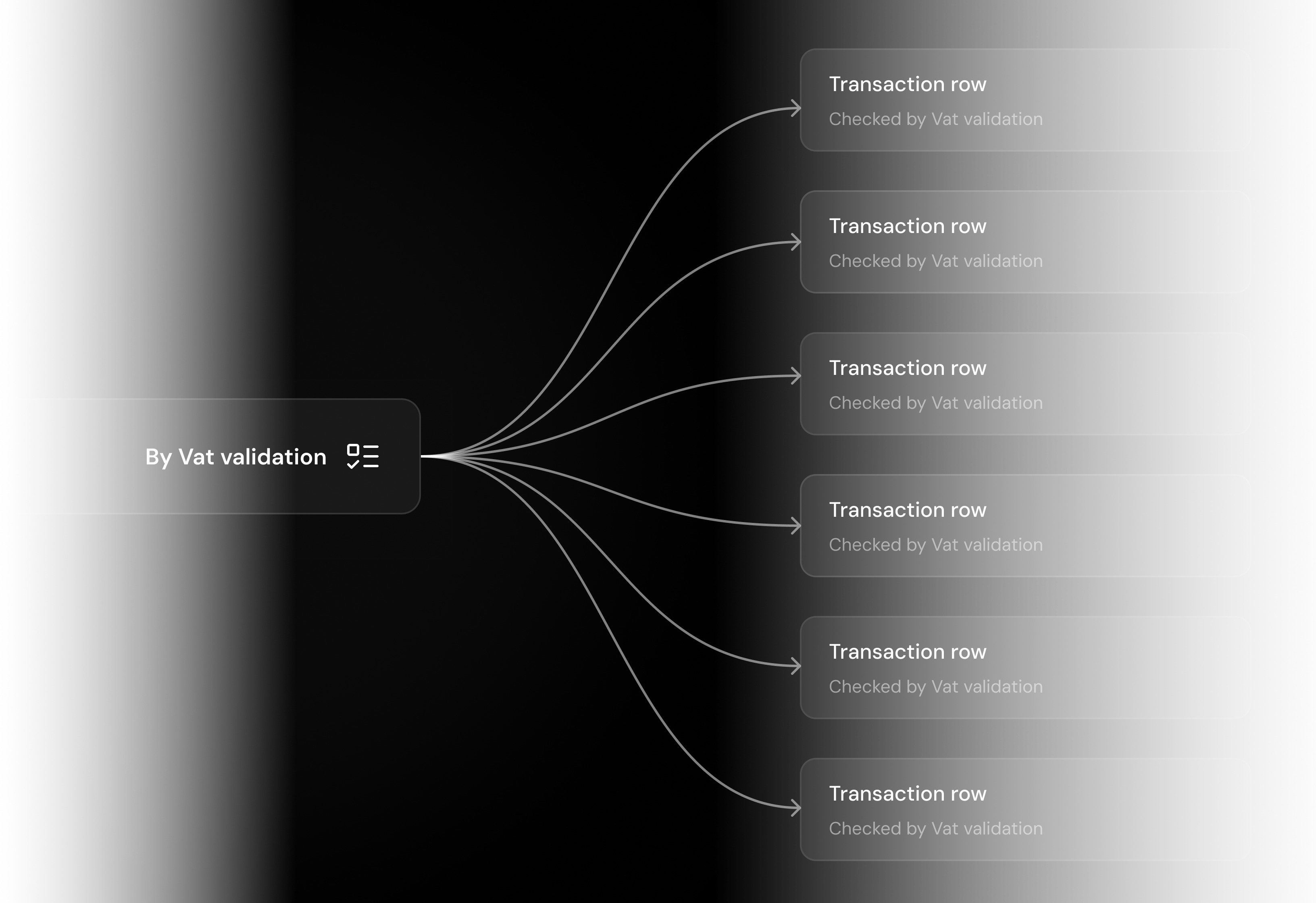
Every transaction gets the same substantive check, not a sample, so nothing sits undiscovered until an authority finds it.
How GraphBit VAT Validation solves it
Substantive, not formal
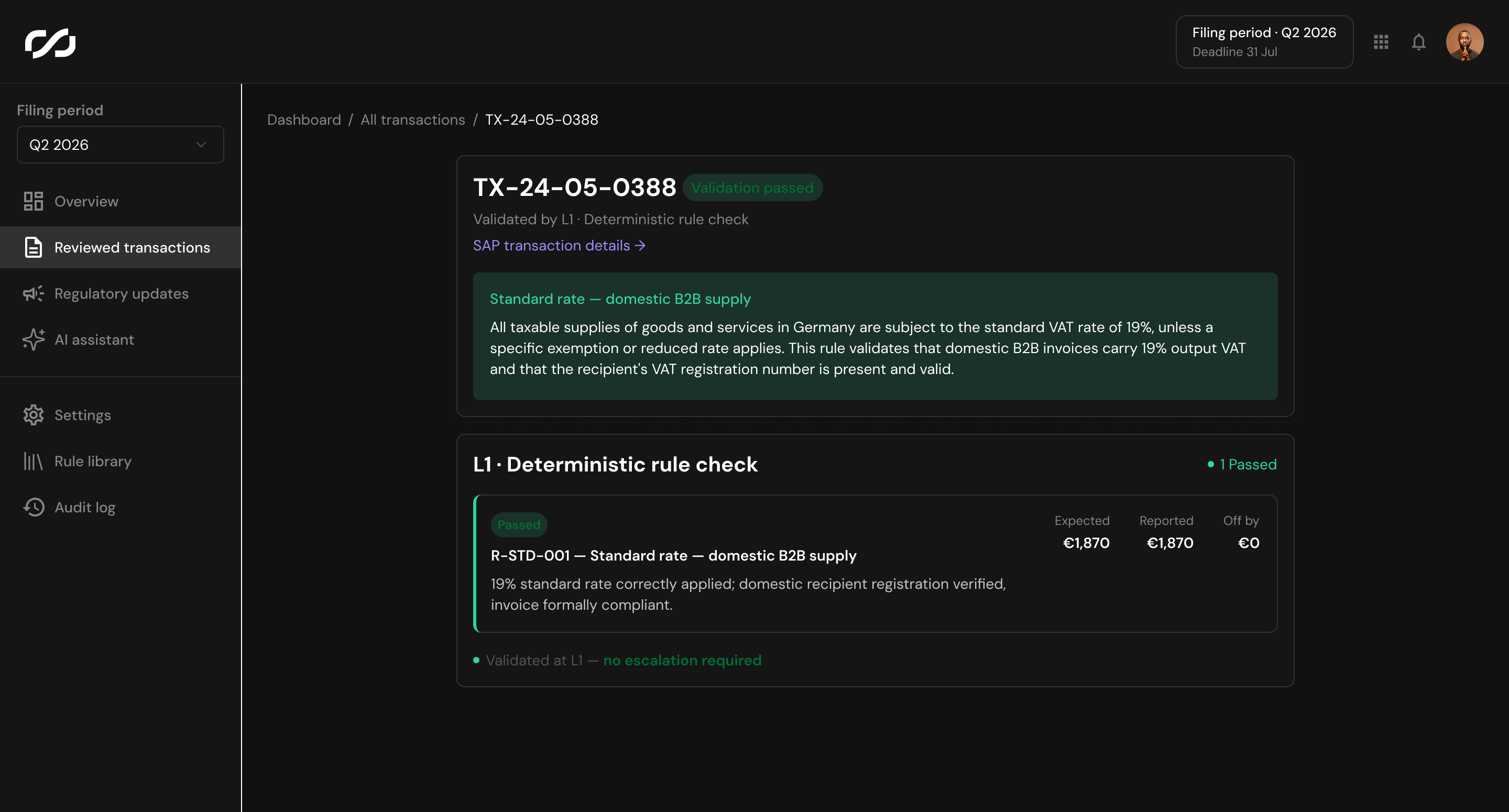
A technically valid e-invoice can be wrong on the tax. Format validation confirms the fields, the arithmetic and the EN 16931 structure; it says nothing about whether the supply was characterised correctly, whether the exemption actually applied, whether reverse charge under § 13b was really available, or which rate the law in force on the supply date required. That is the substantive question, and it is the one the auditor asks. GraphBit answers it for every transaction: the facts established from the invoice and its context, the rule applied from a versioned graph of the law, the verdict traced to the provision.
Every transaction, not a sample
The same substantive check runs on 100% of transactions (not the 1-5% a manual review can reach) because the engine's cost per check doesn't scale with headcount.
Says “requires review,” not a guess
Cases the system can't decide on its own (ambiguous positions, missing facts) are flagged as requires review or incomplete, with the reasoning attached, and routed to your expert. Nothing is silently passed through.
Grounded in the law as it stood, on the supply date
Every verdict cites the provision, the administrative guidance and the effective date that governed the transaction, so a check made today can be replayed exactly, years later, in front of an auditor.
100%
of transactions checked, not a sample
Weeks → days
typical audit-cycle compression once every transaction is checked automatically
~90%
Majority of transactions auto-validated with no exceptions raised, so expert time concentrates on the cases that actually need it
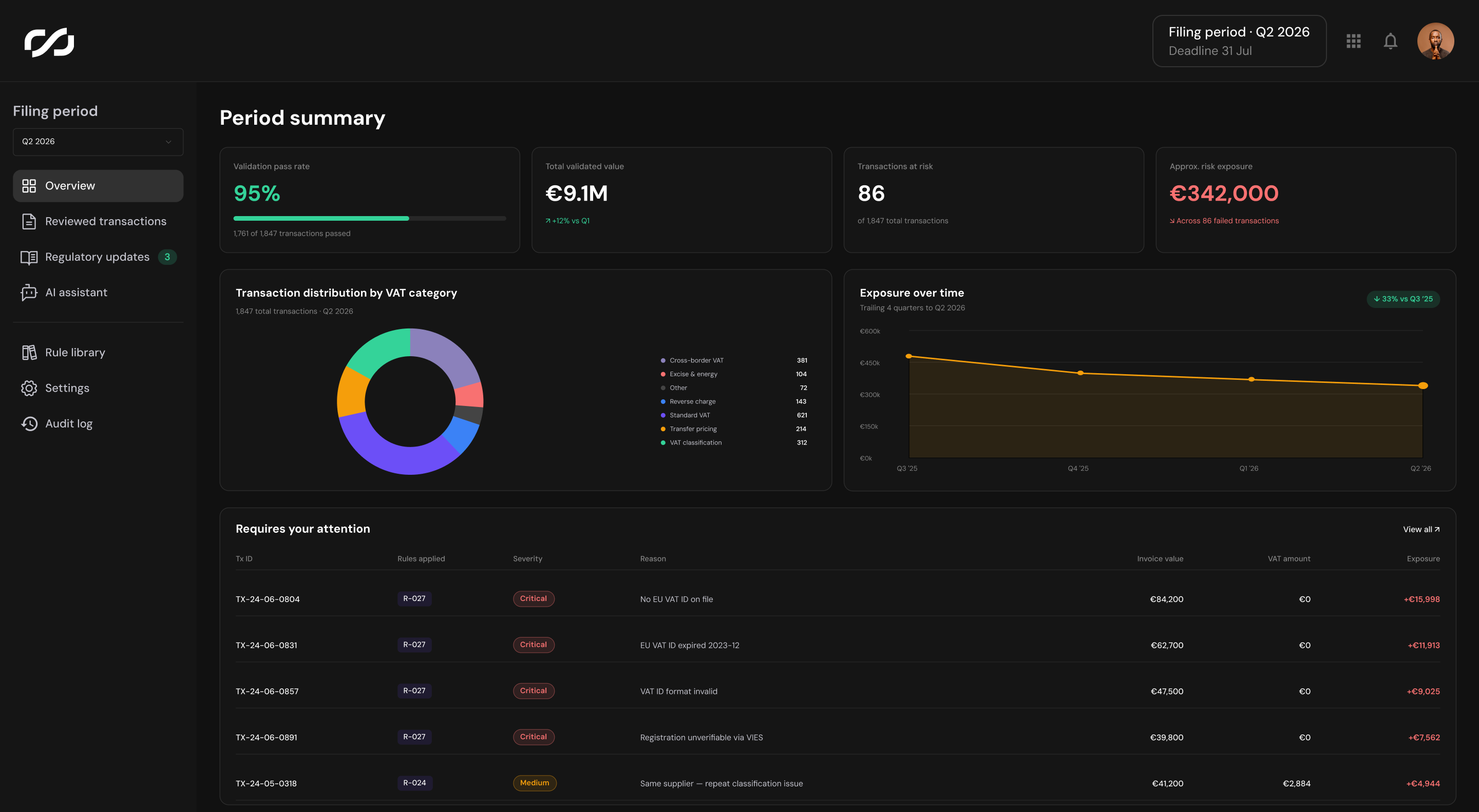
Your VAT position, at a glance
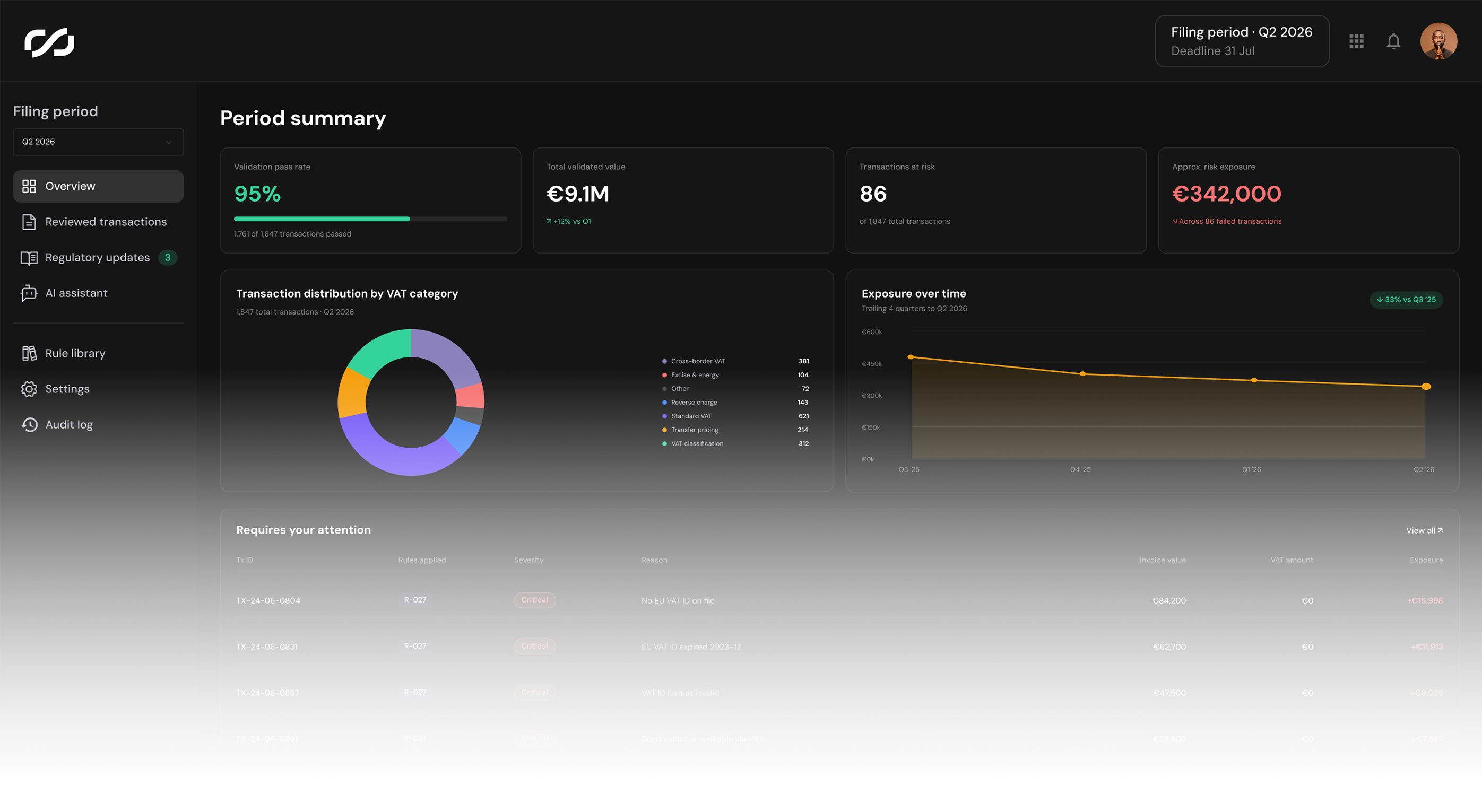
Every transaction rolled up into a single view, so you always know how much VAT is at risk, and every flagged case goes to a human, never an automated guess

Correct
The treatment holds. Documented with the derivation, which is evidence that it was reviewed.
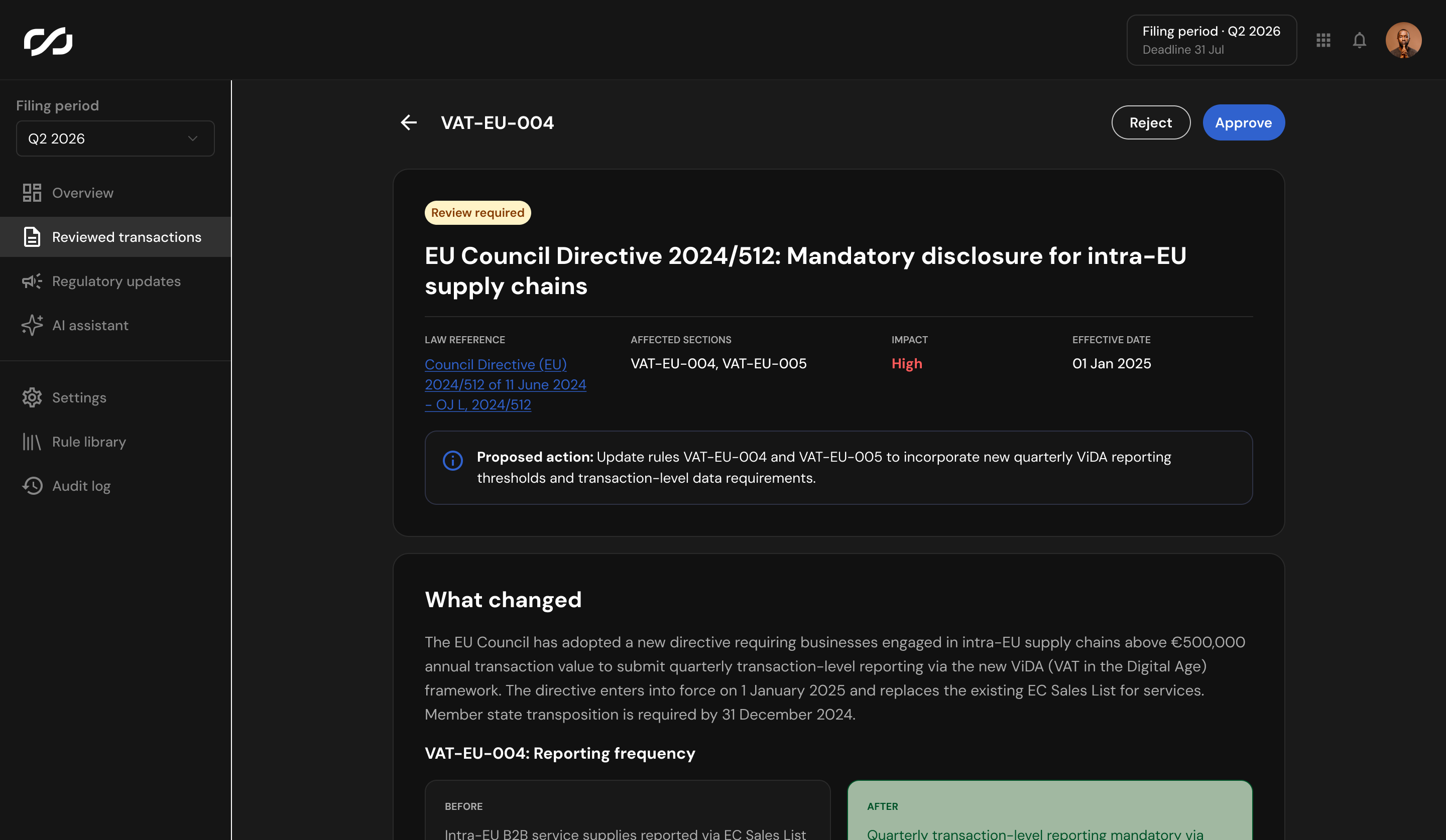
The law changes. The graph changes with it, after an expert has signed it off.
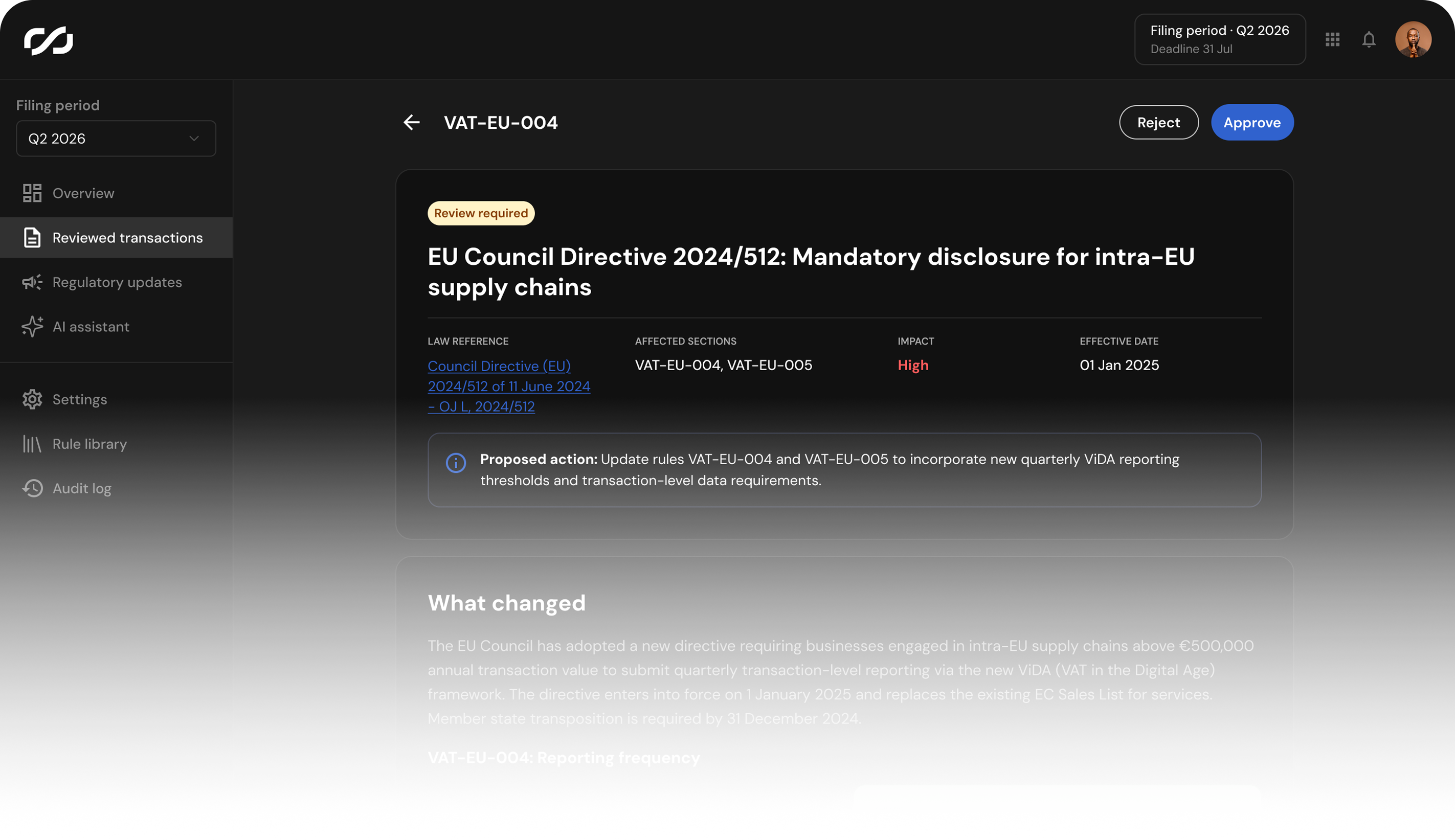
Official sources are monitored continuously. A new ruling, decree or amendment arrives already drafted as a graph update, linked to the provisions it touches and dated to the legal state it creates. A tax expert reviews and approves it before it goes live; nothing enters the graph unvalidated. Transactions before the change keep being checked against the law of their date.
Ask, instead of searching
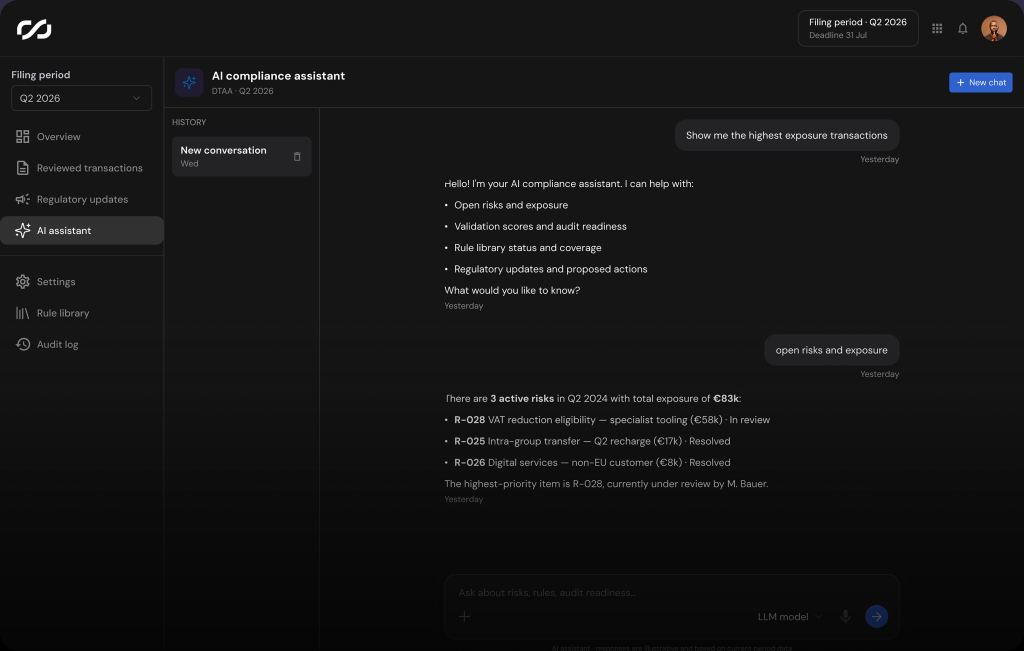
Ask a plain question, the way you would ask a colleague, about risk, readiness, or rule coverage, and get a straight answer pulled from your own data instead of another screen to page through.
Frequently asked questions
Correct means the treatment holds, documented with the derivation, which is evidence that it was reviewed. Needs Review means a specific finding with the provision and the reasoning, correctable before the invoice goes out rather than in the audit. Clarification Required means the case cannot be decided cleanly, for example the allocation in a chain transaction — it goes to your expert with the facts prepared and the defensible readings set out, mostly when something is missing for a sound result. The system names exactly what, instead of guessing on evidence.